The Method
The Care Map Method.
A care map is a route drawn between labeled decisions. It replaces the advice list with something a family or a team can follow: what to decide now, what can wait, who owns it, and what would change the route. Evidence-informed, plainly worded, and designed to be handed to someone else.
The method informs both the family consultations and the licensed frameworks used inside company engagements.
As featured in




The framework
Four domains, read together.
The Model
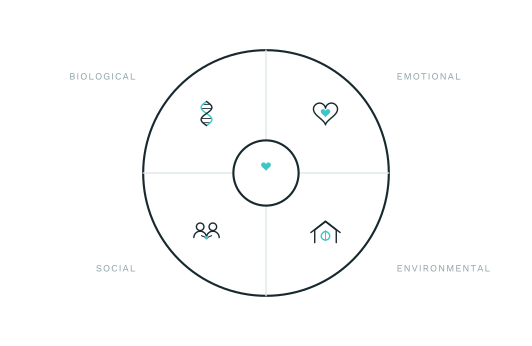
BSE2: four domains.
Every map is read across the same four domains, so nothing that shapes the decision is left out of it.
- Biological
- Health, development, sleep, medical needs and physical capacity.
- Social
- Family roles, relationships, caregivers, school and community.
- Environmental
- Home, setting, logistics, money and the practical constraints around the decision.
- Emotional2
- Squared, because it carries twice the weight: stress, grief and regulation, and alongside them dignity, identity, autonomy and purpose.
The method, drawn
Map. Match. Merge. Manage.
One sheet of the whole method, from assessment through ongoing management.
Map. Assess the whole person.
Every domain is read together rather than one at a time, so the plan answers the real situation and not the loudest symptom of it. Who is involved, what has already been tried, what is fixed and what is negotiable.
Match. Select the right solution.
Providers, arrangements and supports are compared against the map, not against availability or a good first impression. Needs and non-negotiables are written down before candidates are considered.
Merge. Integrate it into real life.
A choice only works once it is written into the week: who does what, when, at what cost, and what happens when it slips. Order matters more than effort.
Manage. Review and adjust over time.
The map is revisited on a rhythm, so a drifting arrangement is caught early instead of becoming the next emergency. Each step has an owner and a condition that would redraw the route.

Stage detail
Inside each stage.
The same four stages hold whether the subject is a toddler, a nanny contract, a parent at the end of independent living, or a benefits program serving thousands of employees.
MAP
Understand the situation.
Where the family actually is right now, not where a checklist assumes they are. Who is involved, what has already been tried, what is fixed and what is negotiable, read across all four BSE² domains.
MATCH
Identify the right fit.
The right level of care, the right caregiver, the right setting. Needs and non-negotiables written down first, then candidates and options compared against them rather than against a feeling.
MERGE
Create a workable next chapter.
Order matters more than effort. The new arrangement gets folded into a household that already has a shape: a sequence a family can carry, with the trade-offs of each branch written down rather than implied.
MANAGE
Keep it working over time.
Who owns each step, what language they use, and the specific conditions that would redraw the route. A map is only useful if it survives contact with a real week.
The Care Map Method
Clarity today. Confidence tomorrow.
What it is, and is not
Principles behind the map.
Sequence over volume
Families rarely lack information. They lack an order of operations. The map's value is deciding what happens first.
Written trade-offs
Every branch has a cost. Naming it out loud is what makes a decision hold up two months later, when the pressure returns.
Evidence-informed, not doctrinaire
Child development and eldercare research inform the options. The family's constraints determine the route. No single philosophy is applied to every household.
Portable by design
A map that only works with me in the room is not finished. The output is language, questions and a sequence you can hand to a partner, a sibling or a team.
Consultation, not psychotherapy
Consulting and advisory work is not psychotherapy and does not create a therapist–client relationship. Where clinical care is the right next step, the map says so and points to it.
No promised outcomes
A map improves the quality of a decision and the clarity of the next step. It does not guarantee a clinical or business result, and nothing here should be read as one.
Use the method, or license it.
Families work through the map in consultation. Companies license the framework, the diagrams and the decision structures for use inside their own products and programs.